
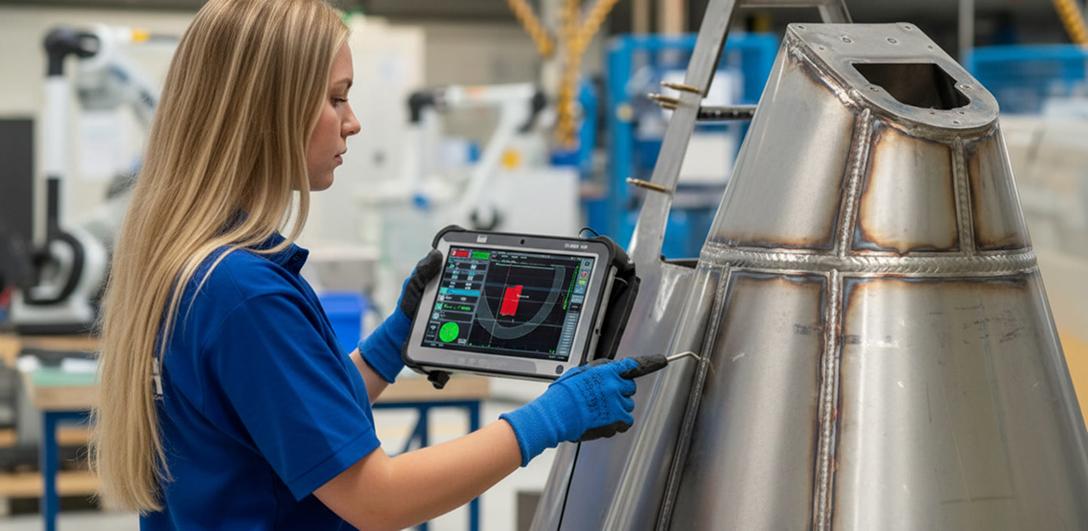
Quality inspections at Technomix.

Coating thickness measurement

Coating thickness measurement determines the thickness of coatings or functional surface layers on components. The aim is to ensure compliance with defined specifications and to demonstrate the protective or functional effect of the coating.

Coating thickness measurement

Reliably evaluating coatings – ensuring protective performance

Coatings fulfil different functions in technical applications: corrosion protection, wear protection, electrical insulation or decorative requirements. Coating thickness has a major influence on the service life and functionality of a component.

A coating that is too thin can impair protective performance, while a coating that is too thick can lead to fit issues or material stresses. Coating thickness measurement ensures that specified tolerances are met.

Depending on the material combination and coating type, different measurement methods are used – non-destructive or destructive, point-by-point or areal.

Which layers or characteristics are inspected?

Within coating thickness measurement, the following characteristics can be determined, among others:

  • Thickness of galvanic coatings (e.g. zinc, nickel, chrome)
  • Paint or powder coatings
  • Anodised or oxide layers
  • Multi-layer coating systems

The choice of suitable measurement method depends on substrate material, layer material, component geometry and the required measurement accuracy.

Methods used

Coating thickness measurement can be performed using different methods:

  • Eddy current testing (ET) – for measuring non-conductive layers on a conductive substrate
  • Magnetic-inductive methods – for determining non-magnetic layers on a ferromagnetic substrate
  • X-ray based methods (RT) – for analysing multi-layer systems or complex layer structures
  • Metallographic section analysis – for destructive microstructure examination to determine layers precisely

Depending on requirements, measurement is performed as sampling, series-accompanying or as 100% control.

Typical use cases for coating thickness measurement

Coating thickness measurement is used in particular:

  • After galvanic or thermal coating processes
  • During incoming inspection of coated components
  • For process monitoring in series production
  • As part of complaint analyses
  • For corrosion protection or service life assessments

Industries and application areas for coating thickness measurement

Coating thickness measurement is relevant in all industrial sectors where coated components are critical to function or safety, including:

  • Automotive and supply industry
  • Aerospace
  • Mechanical and plant engineering
  • Energy and power plant sector
  • Electronics industry
  • Metal processing and surface technology

The specific design of the inspection depends on the component, accessibility, lighting conditions and the respective quality requirements.

How coating thickness measurement is carried out at Technomix

Coating thickness measurement is performed on the basis of clearly defined inspection plans and agreed specifications. Depending on the material combination and measurement requirements, the suitable method is selected and calibrated.

Results are documented and statistically evaluated where required. Organisational integration is handled within our quality management system according to DIN EN ISO 9001.

Final CTA

Contact & consultation on coating thickness measurement

Would you like to verify whether the coating thickness of your components meets the required specifications?

We will be happy to support you in selecting a suitable measurement method and developing an appropriate inspection concept together with you – aligned with material, coating system and series volume.