
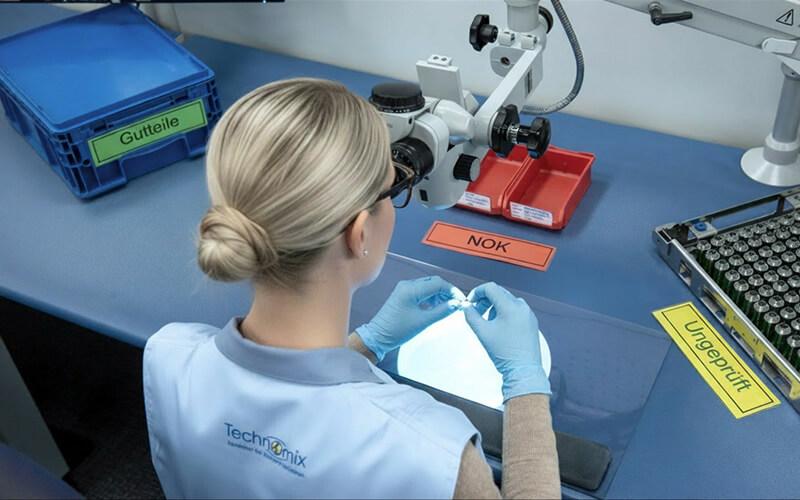
Quality inspections at Technomix.

Surface inspection

Surface inspection assesses visible features and irregularities on component surfaces. The aim is to detect optical, functional or safety-relevant deviations early and secure quality in the manufacturing process.

Surface inspection

Reliably assessing surface conditions – making quality visible

A component’s surface often has a direct influence on its function, service life or visual appearance. Damage, machining marks or surface defects can lead to increased wear, corrosion or complaints.

Within surface inspection, visible deviations are assessed systematically. Depending on requirements, inspection is performed manually or fully automatically – as sampling or as 100% control.

Surface inspection is frequently the first inspection step within a tiered quality concept.

Which characteristics are inspected?

Within surface inspection, the following properties can be assessed, among others:

  • Scratches, scoring or pressure marks
  • Machining marks or grinding burn indications
  • Damage or material breakouts
  • Irregularities in coatings or surface structures

Evaluation is based on defined defect catalogues and agreed quality criteria.

Methods used

Surface inspection can include different methodological approaches:

Depending on the inspection objective, surface inspection can be combined with further non-destructive test methods.

Typical use cases for surface inspection

Surface inspection is used in particular:

  • During incoming goods inspection
  • During series production
  • In safe-launch phases
  • Before further processing or coating
  • As part of complaint handling

Depending on requirements, inspection is performed manually, semi-automatically or fully automatically.

Industries and application areas for surface inspection

Surface inspection is relevant across industries, including:

  • Automotive and supply industry
  • Aerospace
  • Mechanical and plant engineering
  • Medical technology
  • Electronics industry
  • Metal processing

The specific design of the inspection depends on the component, accessibility, lighting conditions and the respective quality requirements.

How surface inspection is carried out at Technomix

Surface inspection is carried out on the basis of defined inspection criteria, defect catalogues and agreed acceptance limits. Depending on the component and lot size, manual visual inspections or automated camera systems are used.

For series applications, automated inspection systems with integrated image processing are available to inspect high volumes in a reproducible and documented way.

Organisational integration is handled within our quality management system according to DIN EN ISO 9001.

Final CTA

Contact & consultation on surface inspection

Would you like to assess visible quality characteristics of your components systematically or implement series-accompanying surface control?

We will be happy to support you in defining suitable inspection criteria and developing an appropriate inspection concept – manual or automated.